Architecting a New Core Pillar for Patient Adherence
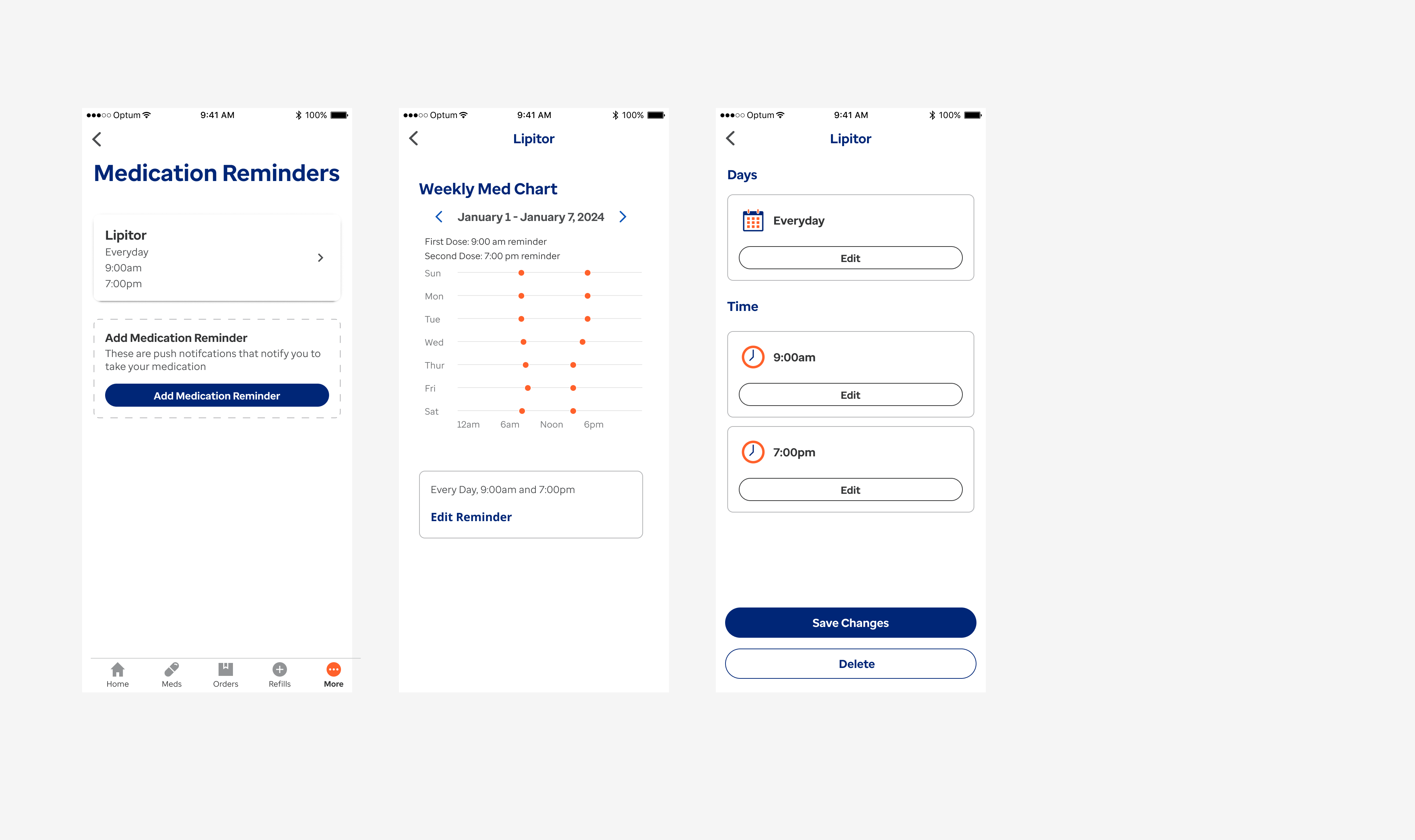
I led the initiative to design and launch the Medication Reminders feature within the OptumRx ecosystem. Previously, the mobile app was primarily transactional (refills and tracking). I was tasked with shifting the product toward a proactive health companion, defining the end-to-end logic for a complex feature set where no prior framework existed.
From Ambiguity to Architecture
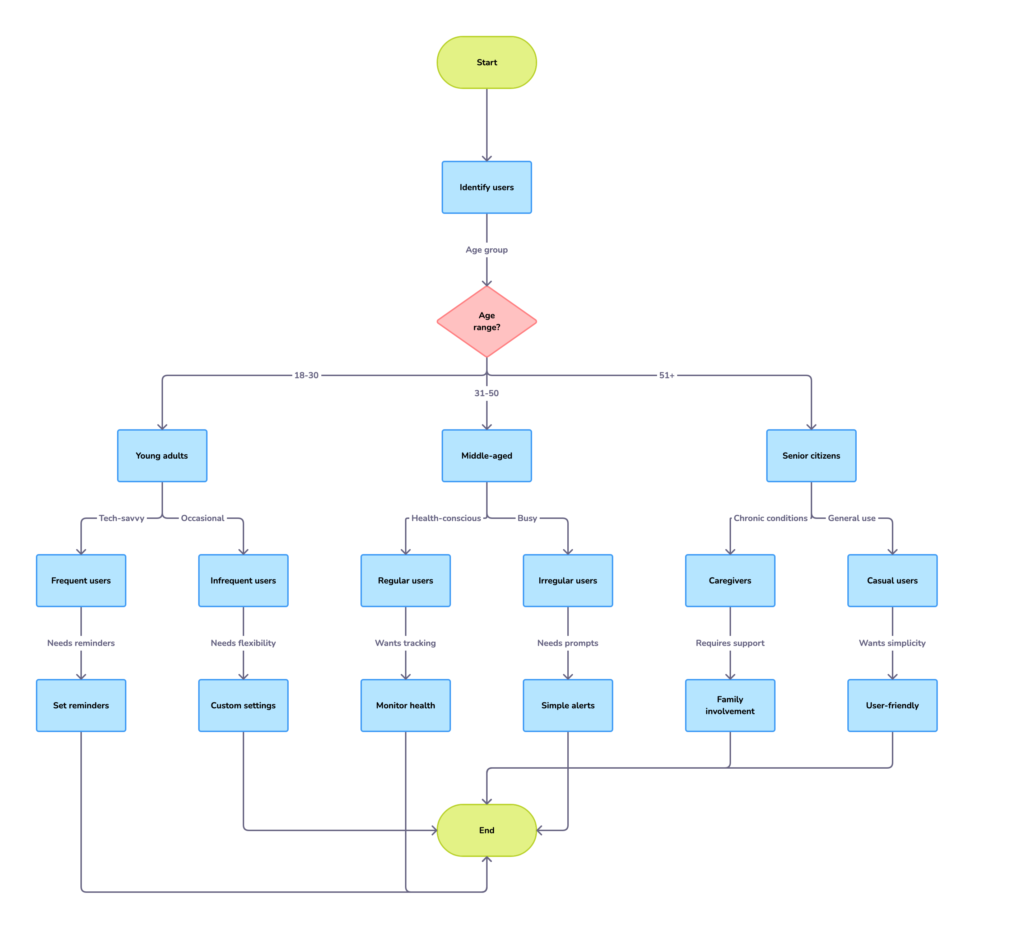
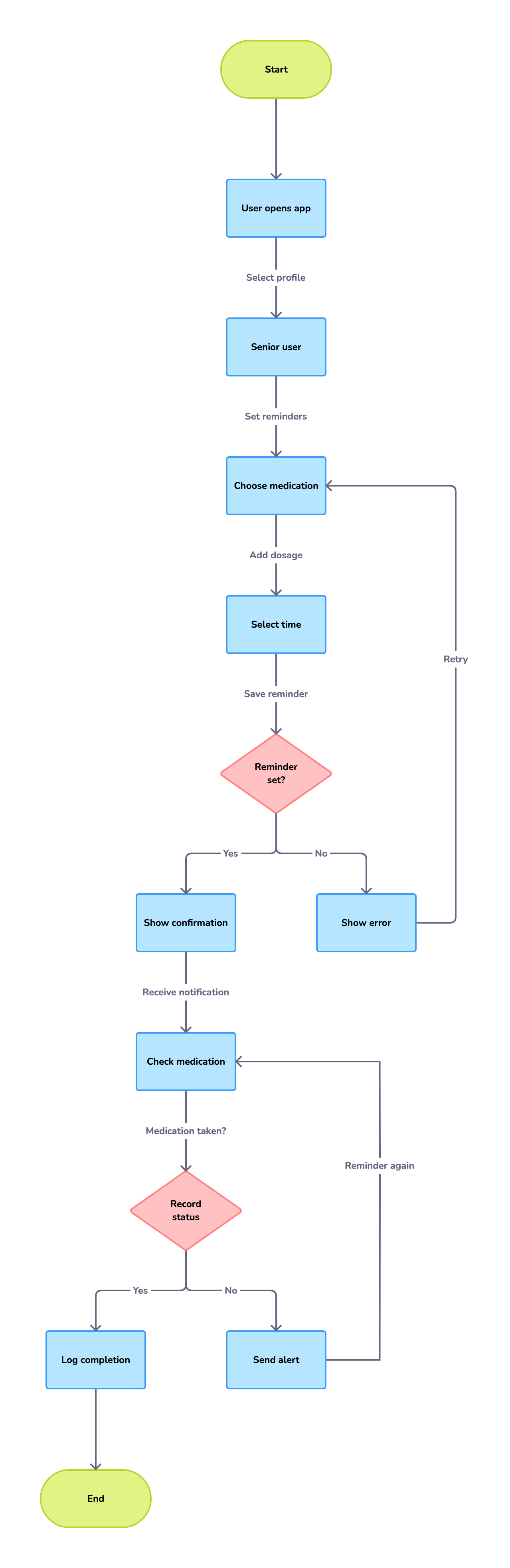
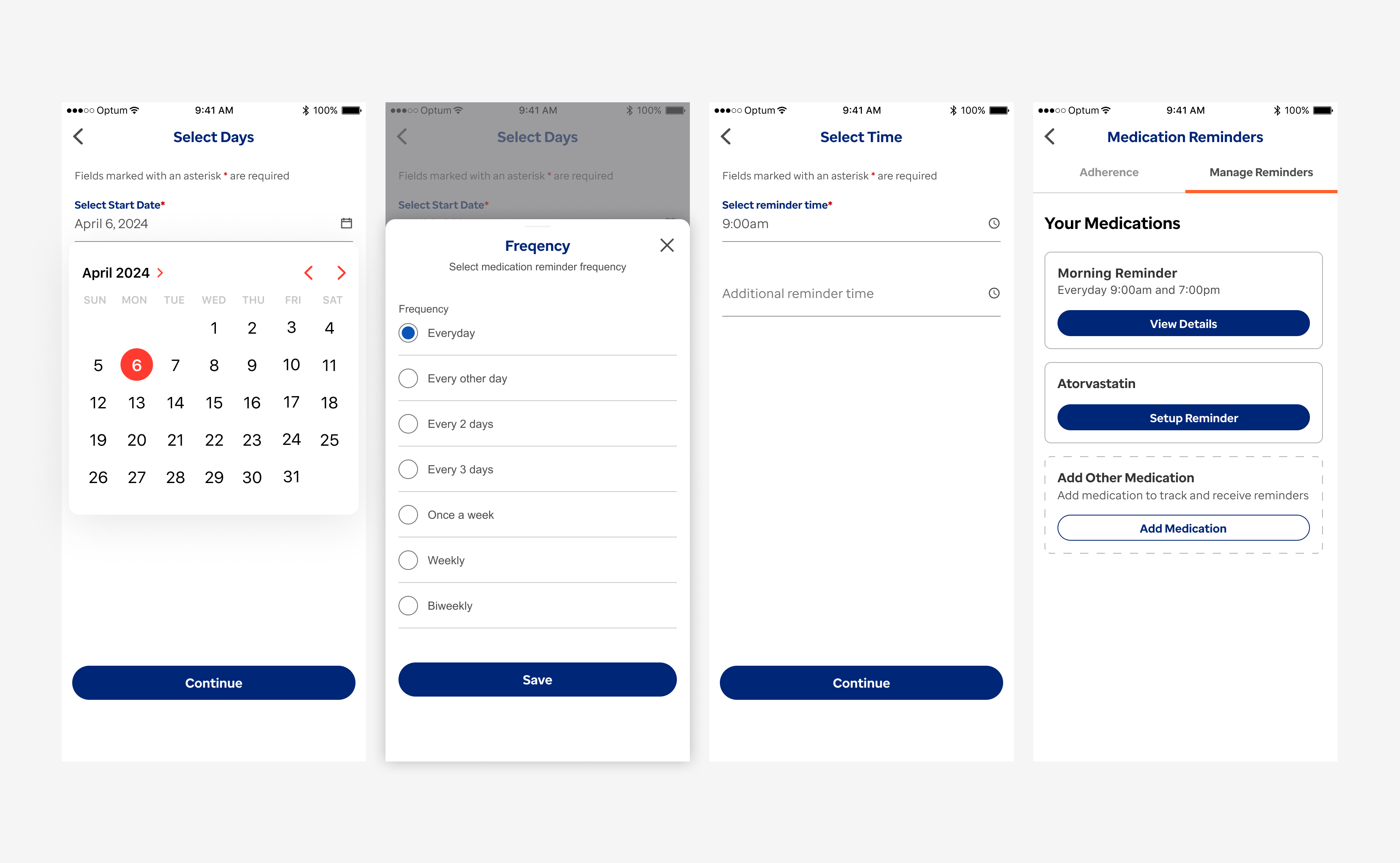
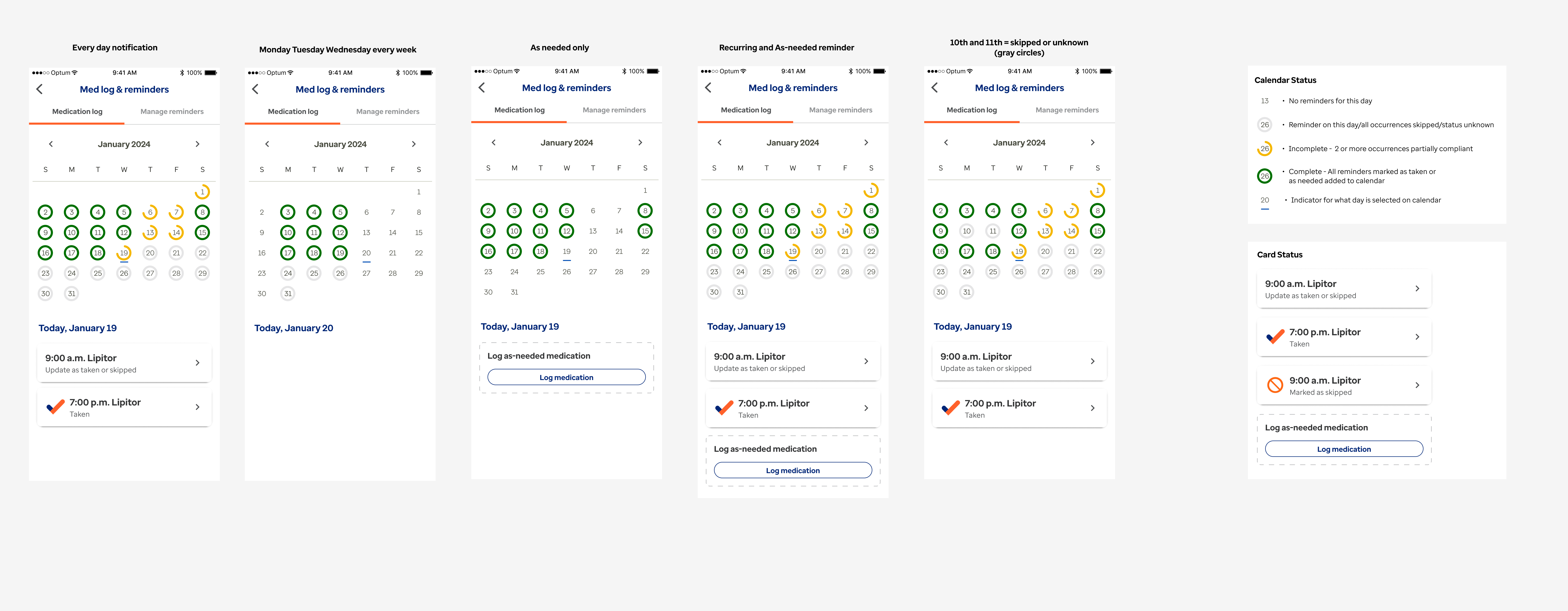
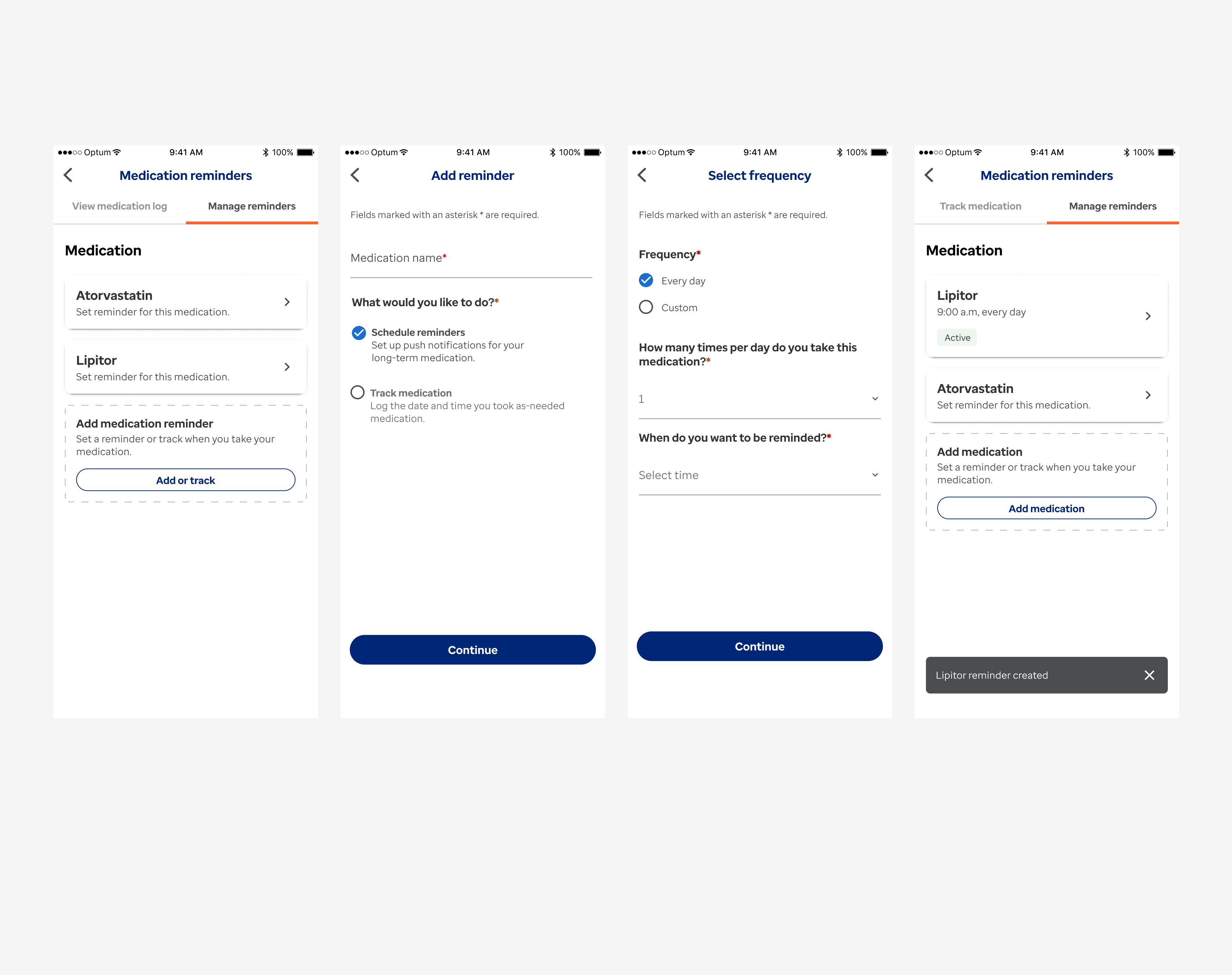
Starting with a blank slate, I translated complex clinical requirements—such as titration schedules and dosage intervals—into a simplified user interface. I didn’t just design screens; I defined the system logic. This included architecting how the app handles edge cases, such as missed doses, time-zone shifts for travelers, and ‘as-needed’ medication workflows that hadn’t been previously supported.
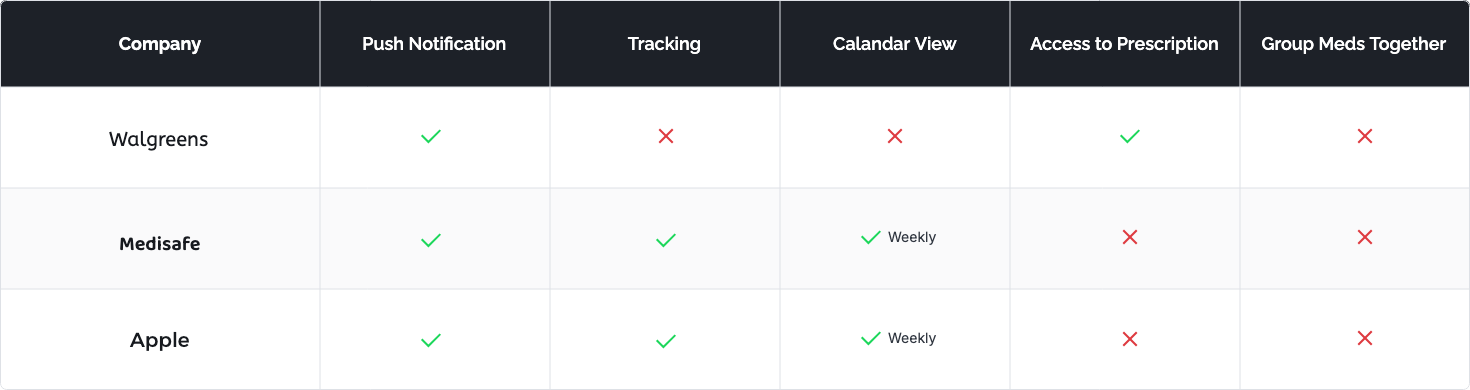
Competitive Analysis
I led a discovery phase, auditing the medication management landscape to identify gaps in existing solutions. This research allowed us to pivot from a simple ‘alarm clock’ model to a sophisticated health companion that addressed actual user pain points around medication adherence.
Seamless Ecosystem Integration
A major challenge was introducing a high-engagement feature into an established app without creating ‘feature bloat.’ I conducted a comprehensive audit of the existing user journey to identify the most contextual ‘entry points’ for reminders. By utilizing Atomic Design principles, I created a suite of modular components that felt native to the OptumRx experience while providing the unique utility required for daily health management.
Scaling from MVP to Enterprise Standard
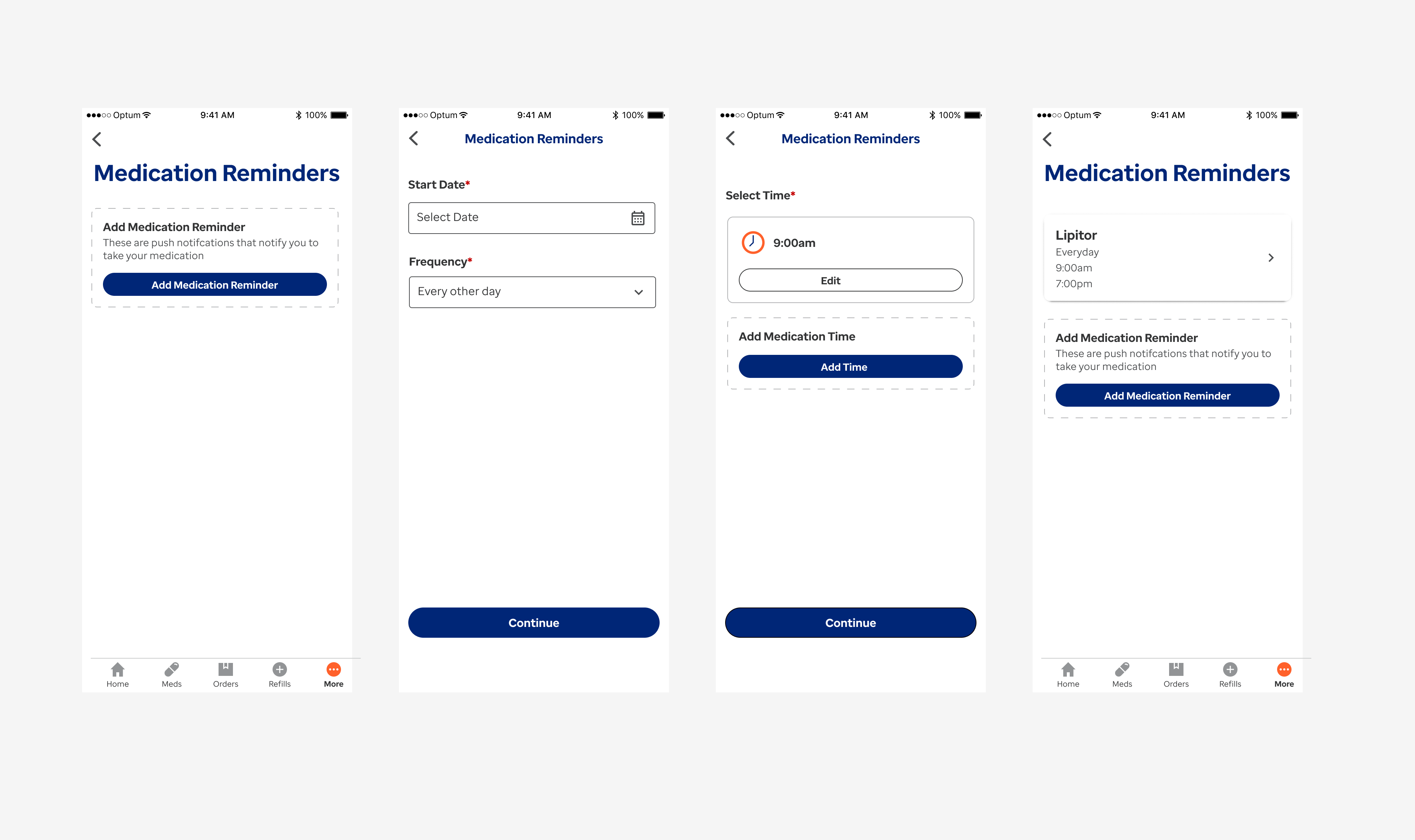
In the Zero-to-1 phase, I collaborated with Product and Engineering to identify the Minimum Lovable Product. We prioritized a ‘Smart Scheduling’ engine that reduced setup friction. I built this feature with a long-term vision, ensuring the underlying design tokens and data structures were flexible enough to eventually support caregiver-delegated reminders and integration with wearable health data.
2nd Iteration
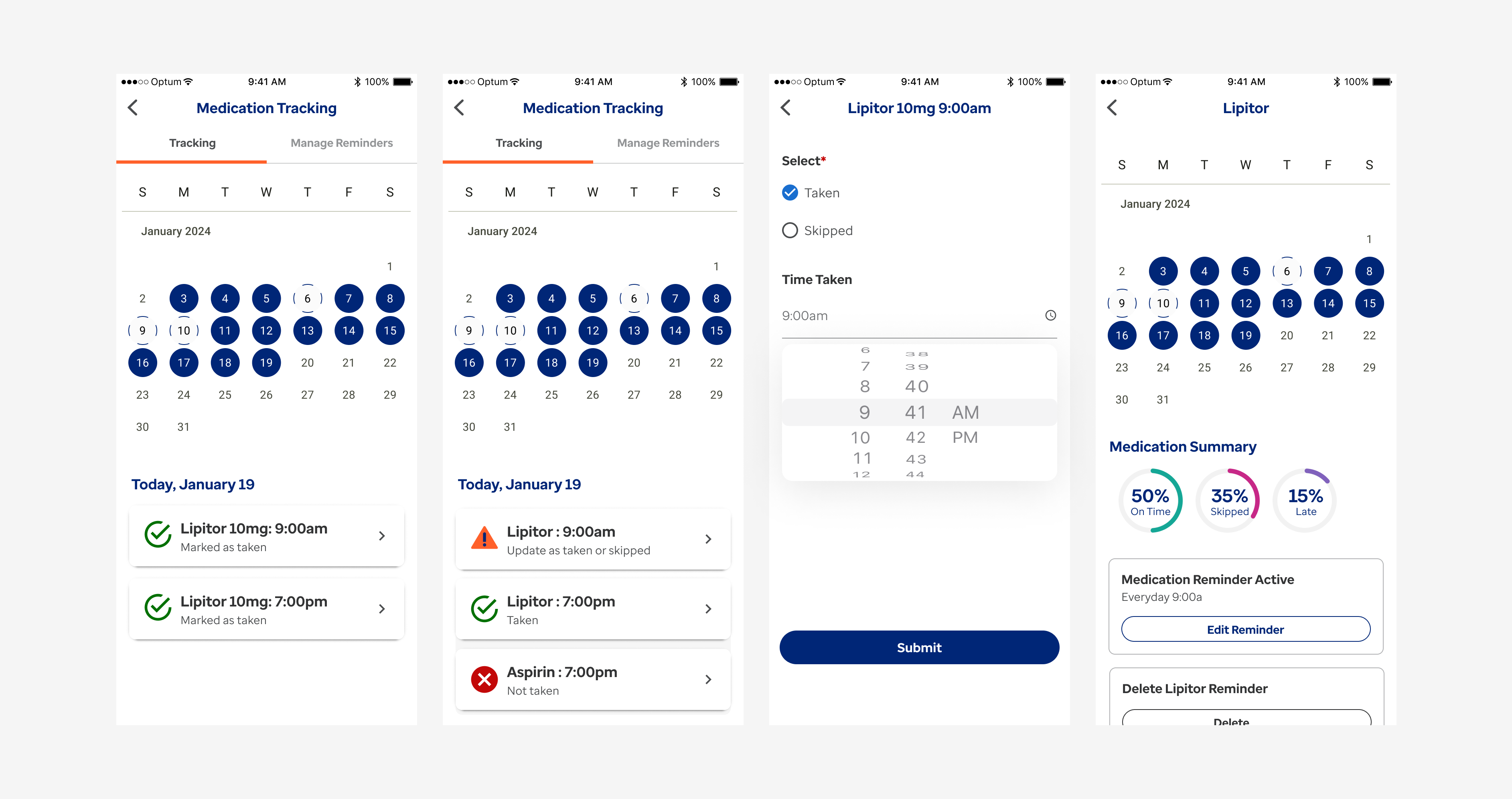
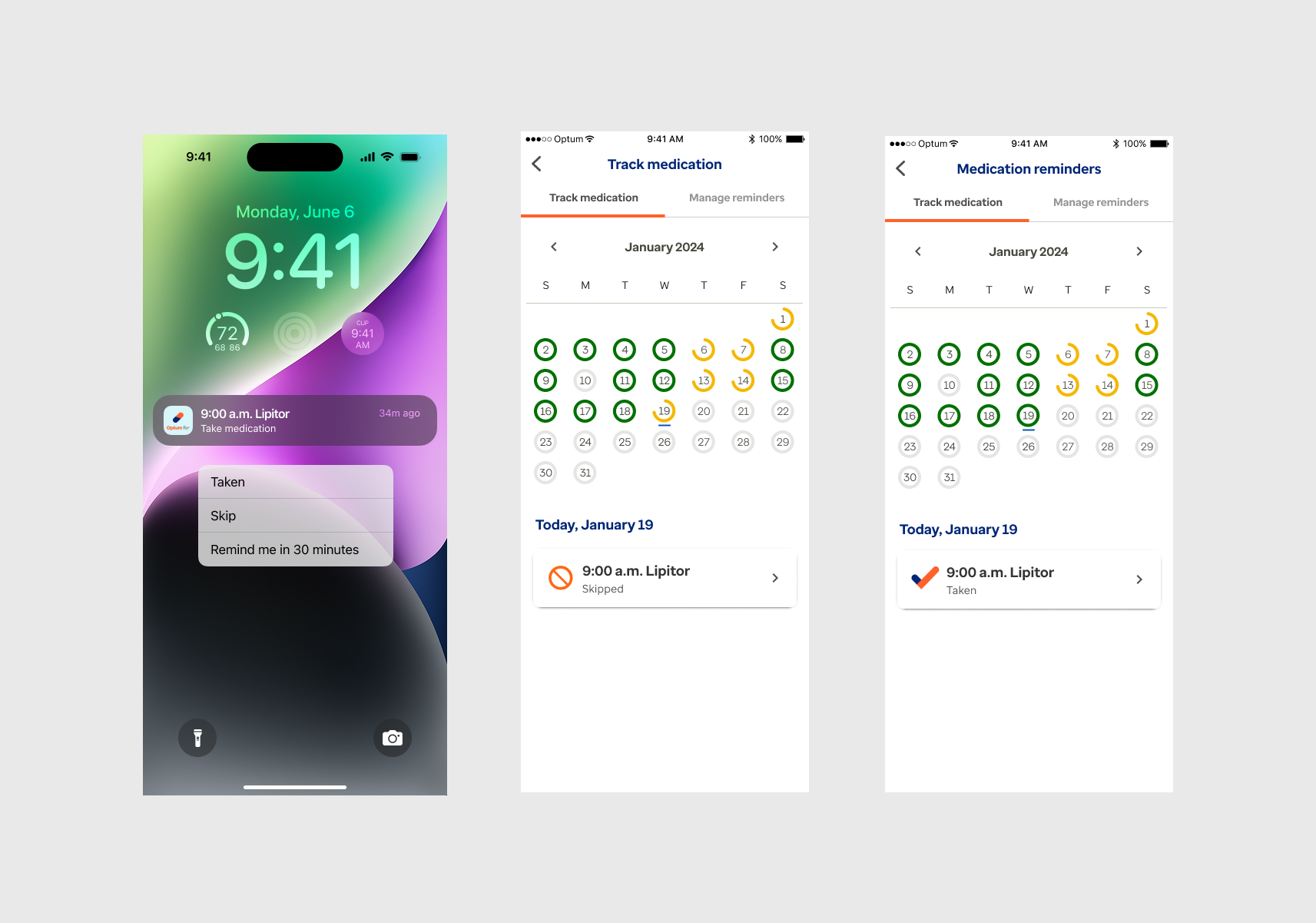
In the second iteration, I focused on optimizing the “Time-to-Value” by streamlining the medication setup flow. Recognizing that adherence is a long-term habit, I introduced a centralized calendar view to provide users with a clear sense of progress and historical data. I then facilitated a stakeholder review session, leveraging these high-fidelity prototypes to align product and technical leads on the feature’s trajectory and to ensure our logic met stringent medical compliance standards
Strategic Consensus & Interface Design
The calendar view served as the backbone for long-term adherence tracking. I acted as the primary bridge between multiple stakeholder groups, distilling a variety of opinions into a cohesive design strategy. The resulting interface successfully reconciled business goals for data collection with the user’s need for a friction-less logging experience, de-risking the feature for its Zero-to-1 launch..
Delivery & Future Scalability
The Medication Reminders feature went live in early 2025, representing a successful cross-functional effort to modernize the OptumRx member journey. Beyond the initial launch, I delivered a comprehensive documentation package and a scalable component library. This ensures that as the feature evolves—potentially expanding into caregiver support or wearable integrations—the design system remains robust and the user experience remains cohesive.